
Writing
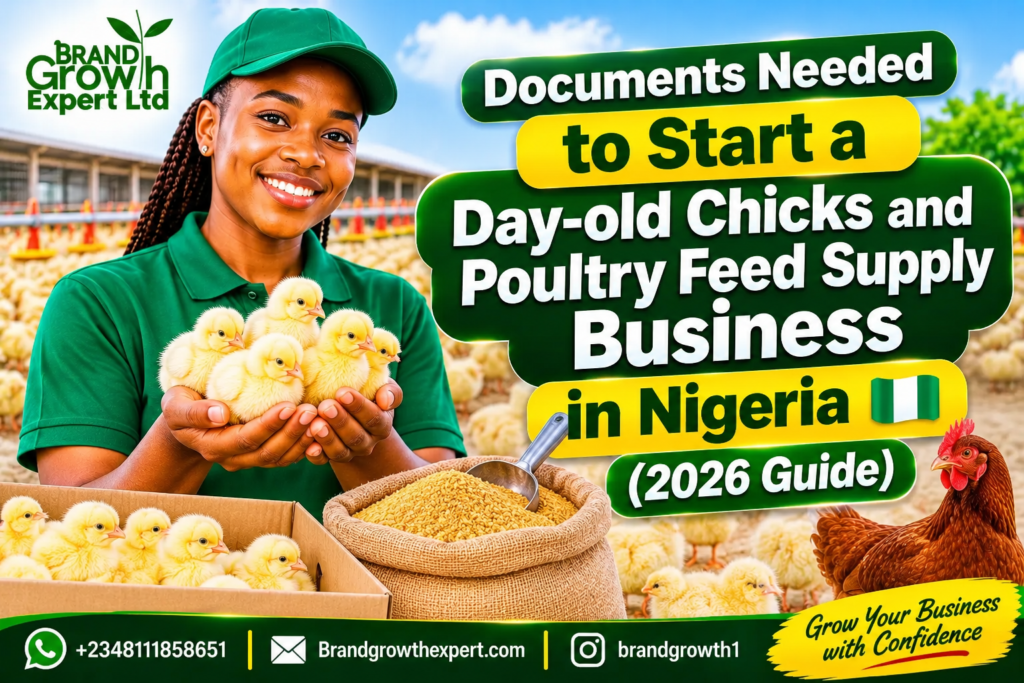
Documents Needed to Start a Day-old Chicks and Poultry Feed Supply Business in Nigeria (2026 Guide)
Starting a day-old chicks and poultry feed supply business in Nigeria can be a promising opportunity for entrepreneurs interested in the agricultural and livestock industry. Poultry farmers need healthy chicks to establish their farms and quality feed to raise broilers, layers and other poultry birds.
You can build a business supplying day-old chicks, poultry feed and other poultry farming essentials to small-scale and commercial poultry farmers without owning a hatchery or feed manufacturing factory.
However, before starting, you need to understand the registration documents, supplier requirements and regulatory obligations that apply to your business.
This guide explains the documents needed, equipment, startup requirements and steps involved in starting a day-old chicks and poultry feed supply business in Nigeria in 2026.
1. Understand How the Business Works
There are different ways to operate a day-old chicks and poultry feed supply business.
Day-old chicks distribution: You purchase chicks from established hatcheries and supply them to poultry farmers, agro-dealers and other customers.
Poultry feed distribution: You purchase finished poultry feed from registered manufacturers and distribute it to poultry farmers and retailers.
Combined poultry supply business: You sell day-old chicks and poultry feed together, giving customers access to two important poultry farming products from one supplier.
Poultry equipment and accessories: You can expand by supplying drinkers, feeders, brooders, vaccines from authorised sources and other poultry farming essentials.
For a beginner, starting as a distributor or retailer is generally simpler than establishing a hatchery or feed manufacturing facility.
2. Documents Needed to Start the Business
The documents and approvals required depend on whether you are distributing finished products, operating a hatchery, manufacturing feed or importing poultry products.
For an ordinary distribution business, the following are important documents and compliance areas to consider.
A. CAC Certificate of Registration
Register your business with the Corporate Affairs Commission (CAC).
You can register as a business name or incorporate a limited liability company.
A business name may be suitable for a small poultry supply shop, while a limited liability company may be appropriate if you plan to operate a larger distribution company, supply multiple states or enter into major contracts.
Common CAC registration requirements include:
- Proposed business name.
- Business owner’s details.
- Business address.
- Residential or contact address.
- Valid identification.
- Phone number and email address.
- Details of directors, where applicable.
- Description of business activities.
Your business activities should accurately reflect what you intend to do, such as poultry products distribution, day-old chicks supply, animal feed distribution and agricultural supplies.
B. Tax Registration Details
Ensure your business has the appropriate tax registration details and complies with applicable federal and state tax obligations.
Keep records of your sales, purchases, expenses, supplier invoices and other business transactions.
C. Nigerian Institute of Animal Science (NIAS) Requirements
The Nigerian Institute of Animal Science regulates important aspects of animal production and feed-related activities.
NIAS publishes requirements for registration of feed-related premises, including a category for distributors of finished feeds, concentrates and vitamin/mineral premixes.
Its published registration notice lists a distributor category and a fee of ₦50,000. However, this is a published fee that should be confirmed directly with NIAS before budgeting or payment.
If you intend to operate a poultry feed distribution business, contact NIAS to confirm the current registration requirements and the category applicable to your specific operation.
Official website: https://nias.gov.ng/
D. NAFDAC Product Compliance
NAFDAC regulates animal feed, veterinary medicines, vaccines and other veterinary-related products in Nigeria.
If you distribute poultry feed, ensure that the products you purchase are properly registered and labelled as required.
Before buying stock:
- Check the product’s NAFDAC registration details.
- Verify products through the official NAFDAC platform.
- Purchase from reliable manufacturers or authorised distributors.
- Keep invoices and supplier records.
- Avoid products with damaged or suspicious packaging.
- Store feed according to the manufacturer’s instructions.
NAFDAC also regulates veterinary medicines and vaccines. If you intend to sell poultry vaccines, antibiotics, veterinary medicines or other regulated products, confirm the additional requirements before including them in your business.
Official product verification portal: https://registration.nafdac.gov.ng/
E. Local Government Business Permit
Depending on your state and local government area, you may need a business premises permit, trade-related approval or other local registration.
Contact the relevant local government authority to confirm the requirements for your shop or warehouse.
F. Environmental Health and Premises Requirements
Your shop or warehouse should be suitable for storing poultry feed and handling day-old chicks.
Depending on your location, local environmental health authorities may require an inspection or other compliance measures.
Ensure that your premises are clean, protected against pests and suitable for the products you intend to sell.
G. Importation Documents, Where Applicable
If you intend to import day-old chicks, poultry feed or other animal products directly from outside Nigeria, additional permits and documentation may apply.
The Nigeria Agricultural Quarantine Service (NAQS) carries out animal health inspections and controls the importation and exportation of live animals and relevant animal products.
Depending on the product, you may need import permits, veterinary health certificates and other required documents.
Official website: https://naqs.gov.ng/
Important: A local distributor buying chicks from an established Nigerian hatchery does not automatically need the same import permits as an importer. Similarly, a retailer selling finished poultry feed is not the same as a feed manufacturer. Confirm the requirements for your actual business activities before commencing operations.
3. Requirements for Supplying Day-old Chicks
Day-old chicks are delicate and require proper handling, packaging and transportation.
If you want to become a reliable chick distributor, establish a relationship with reputable hatcheries that can supply healthy chicks consistently.
Before accepting chicks from a supplier, consider the following:
- Hatchery reputation and reliability.
- Chick quality and condition.
- Breed and strain information.
- Hatch date and delivery date.
- Vaccination information, where applicable.
- Quantity and agreed price.
- Packaging and transportation arrangements.
- Procedures for reporting dead-on-arrival chicks or other delivery problems.
Keep invoices, delivery notes and relevant health or vaccination records supplied by the hatchery.
The Nigerian Institute of Animal Science has published hatchery regulations covering hatchery registration and the production, handling, transportation and distribution of day-old chicks.
If you intend to establish or operate your own hatchery, you will need to investigate the separate NIAS hatchery registration requirements. Do not assume that a simple chick retail outlet has the same obligations as a hatchery operator.
4. Requirements for Distributing Poultry Feed
Poultry feed is one of the most important products in this business because farmers need a consistent supply throughout the birds’ production cycle.
You can distribute different feed types, depending on your customers’ needs.
Common poultry feed categories include:
Broiler starter feed: Used during the early growth stage of broiler chickens.
Broiler finisher feed: Used during the finishing stage to support growth before market.
Layer starter feed: Used for young female birds during their early development.
Layer grower feed: Used as pullets develop before laying.
Layer mash or pellets: Formulated for laying birds.
Concentrates and premixes: Used in feed formulation according to the manufacturer’s instructions and appropriate nutritional guidance.
When choosing feed suppliers, check:
- Product registration details.
- Manufacturer’s reputation.
- Manufacturing and expiry dates.
- Packaging condition.
- Nutritional information.
- Recommended storage conditions.
- Wholesale prices.
- Delivery arrangements.
Never sell feed that is mouldy, damp, infested or past its expiry date.
5. Equipment Needed to Start the Business
You do not need expensive manufacturing machinery if you are only distributing day-old chicks and finished poultry feed.
However, you will need suitable equipment for storage, handling and transportation.
| Equipment | Purpose |
|---|---|
| Shop or warehouse | Storing feed and handling customer orders |
| Storage shelves or pallets | Keeping feed bags off the floor |
| Delivery vehicle | Transporting feed and chicks |
| Chick transport crates | Moving day-old chicks safely |
| Brooding or holding equipment, if applicable | Temporary handling where permitted and properly managed |
| Hand trolley | Moving heavy feed bags |
| Weighing scale | Checking quantities where necessary |
| Office desk and chair | Managing business records |
| Smartphone | Receiving orders and communicating with customers |
| CCTV cameras | Improving security |
| Fire extinguisher | Supporting fire safety |
For day-old chicks, transportation is particularly important. Use appropriate chick boxes or crates with adequate ventilation and avoid unnecessary delays, overcrowding and exposure to extreme temperatures.
6. How to Choose a Good Business Location
Your business should be located where poultry farmers can easily access your products.
Suitable locations include:
- Areas with many poultry farms.
- Agricultural markets.
- Rural farming communities.
- Commercial neighbourhoods.
- Locations close to livestock and agro-allied businesses.
Before renting a shop or warehouse, consider:
- Accessibility for delivery vehicles.
- Availability of parking and loading space.
- Security.
- Good ventilation.
- Protection against moisture and flooding.
- Distance from your target customers.
- Availability of reliable suppliers nearby.
Poultry feed should be stored in a dry, clean and well-ventilated environment. Keep bags on pallets rather than directly on the floor, and protect them from rodents, insects and moisture.
Day-old chicks should not be kept in unsuitable storage conditions. Arrange delivery to customers as promptly as possible and follow the hatchery’s handling instructions.
7. Where to Buy Day-old Chicks and Poultry Feed
Your suppliers will have a major influence on your business reputation.
For day-old chicks, approach established hatcheries and recognised poultry breeding companies. Ask about their available breeds, delivery schedules, minimum orders and payment terms.
For poultry feed, contact reputable manufacturers or authorised distributors.
Before entering into a supply agreement, find out:
- Wholesale prices.
- Minimum order quantities.
- Delivery costs.
- Payment arrangements.
- Product availability.
- Returns and replacement policies.
- Procedures for handling complaints.
- Whether you can become an authorised distributor.
Avoid buying chicks or feed from unknown suppliers simply because their prices are lower.
8. How Much Does It Cost to Start a Day-old Chicks and Poultry Feed Supply Business in Nigeria?
Your startup capital will depend on your business location, stock quantity, delivery arrangements and whether you intend to distribute chicks, feed or both.
A small retail operation will generally require less capital than a wholesale distribution business serving multiple poultry farms.
Your budget should include:
| Expense | What it covers |
|---|---|
| CAC registration | Business registration expenses |
| Shop or warehouse rent | Suitable business premises |
| NIAS registration, where applicable | Applicable feed distributor or other registration requirements |
| Local permits | Relevant local government approvals |
| Initial chick stock | Purchasing day-old chicks |
| Initial feed stock | Buying poultry feed in bulk |
| Chick transport crates | Safe transportation of chicks |
| Storage equipment | Pallets, shelves and trolleys |
| Delivery vehicle | Purchase, rental or hiring expenses |
| Staff expenses | Salaries and training |
| Marketing | Signboard, flyers and online advertising |
| Working capital | Transportation, loading and daily operating expenses |
There is no single startup cost that applies to every poultry supply business. Obtain quotations from hatcheries, feed manufacturers, landlords and transport providers before preparing your final budget.
You should also maintain emergency funds for unexpected delivery expenses, damaged stock and other business needs.
9. How to Start the Business Step by Step
Follow these steps to establish your day-old chicks and poultry feed supply business.
Step 1: Conduct market research. Identify poultry farms, retailers and agricultural businesses in your target area.
Step 2: Prepare a business plan. Estimate your startup capital, stock requirements, transport expenses, selling prices and expected profit.
Step 3: Choose a suitable location. Rent a clean, accessible shop or warehouse with enough space for feed storage.
Step 4: Register your business with CAC. Choose a suitable business structure and complete the registration process.
Step 5: Confirm NIAS requirements. Contact NIAS to establish whether your feed distribution activities require premises registration and what category applies.
Step 6: Confirm NAFDAC compliance. Ensure the poultry feed and any regulated veterinary products you intend to distribute meet applicable requirements.
Step 7: Find reliable suppliers. Establish relationships with reputable hatcheries and poultry feed manufacturers.
Step 8: Arrange transportation. Secure appropriate transport for feed and day-old chicks.
Step 9: Purchase your initial stock. Begin with products that poultry farmers in your area regularly demand.
Step 10: Promote your business. Visit poultry farms, agro-dealers and agricultural communities to introduce your products.
10. How to Get Customers for Your Poultry Supply Business
You need regular customers to keep your business running successfully.
Here are practical ways to attract poultry farmers:
- Visit poultry farms and introduce your products.
- Build relationships with poultry farmers’ associations.
- Create a WhatsApp Business account.
- Advertise chick availability and feed prices on social media.
- Offer reliable delivery services.
- Provide wholesale prices for bulk purchases.
- Maintain a list of customers and their preferred products.
- Share useful poultry management information.
- Encourage satisfied customers to recommend your business.
- Build relationships with agricultural extension workers and other relevant industry professionals.
You can also create a simple product catalogue showing the available chick breeds, feed types, bag sizes and prices.
11. Common Mistakes to Avoid
Many poultry supply businesses experience losses because of poor supplier selection, weak stock management and inadequate product handling.
Avoid these mistakes:
1. Buying chicks from unreliable hatcheries: Poor-quality chicks can lead to customer complaints and damage your reputation.
2. Ignoring product registration: Make sure the feed and regulated veterinary products you distribute meet applicable regulatory requirements.
3. Poor chick transportation: Delays, overcrowding and unsuitable transportation conditions can affect chick health and survival.
4. Storing poultry feed incorrectly: Moisture, pests and poor ventilation can damage feed and make it unsuitable for sale.
5. Buying too much stock: Avoid tying down your capital in products that may not sell quickly.
6. Selling expired or damaged products: Always check packaging, dates and product condition.
7. Depending on one supplier: Having alternative reliable suppliers can help you manage shortages.
8. Giving too much credit: Uncontrolled credit sales can affect your cash flow.
9. Failing to maintain business records: Record every purchase, sale, expense and customer payment.
12. Is the Day-old Chicks and Poultry Feed Supply Business Profitable in Nigeria?
Yes, the business can generate income because poultry farmers regularly need new chicks and feed to maintain their farms.
However, profitability depends on several factors:
- The wholesale price of chicks and feed.
- Your selling prices.
- The number of customers you serve.
- Transportation and delivery expenses.
- Supplier reliability.
- Stock losses and damaged products.
- Rent and staff costs.
- Competition in your area.
You should calculate your actual operating expenses before deciding your selling prices.
For example, if you purchase feed from a manufacturer and resell it to poultry farmers, your gross margin is the difference between the purchase price and selling price. You must still deduct transport, rent, staff and other operating expenses to determine your actual profit.
For day-old chicks, pay particular attention to delivery timing, customer orders and any agreed replacement or complaint policy. Chicks are living animals, so delays and poor handling can create losses much faster than ordinary merchandise.
Final Thoughts
Starting a day-old chicks and poultry feed supply business in Nigeria can be a good opportunity for entrepreneurs who want to serve the poultry farming industry without establishing their own hatchery or feed manufacturing facility.
To build a reliable business, register with CAC, confirm the applicable NIAS requirements, source chicks from reputable hatcheries and distribute properly registered poultry feed. You should also maintain suitable storage conditions, arrange safe transportation and build strong relationships with poultry farmers.
Remember that distributing finished poultry products is different from operating a hatchery, manufacturing animal feed or importing regulated products. Confirm the requirements for your exact business activities before investing.
If you need professional assistance with registering your business in Nigeria, Brand Growth Expert can guide you through the CAC registration process and help you establish the right documentation foundation for your business.
Need help with CAC registration?
WhatsApp/Call: 08111858651
Email: Brandgrowthboom@gmail.com
Start your poultry supply business with the right documents, reliable suppliers and a clear plan for growth.