
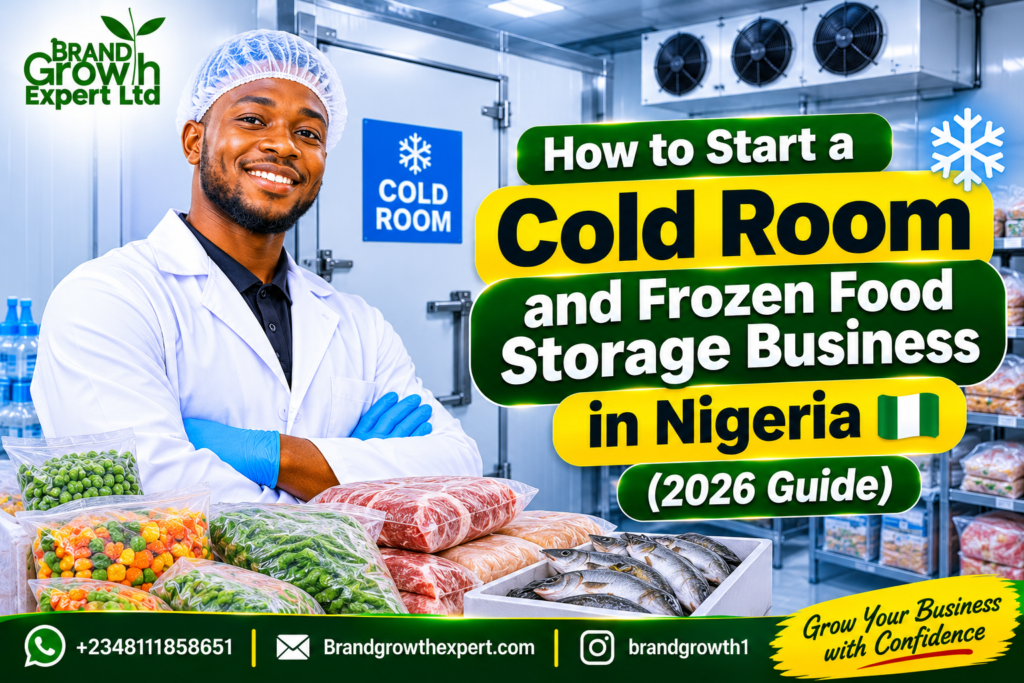
Starting a cold room and frozen food storage business in Nigeria can be a good investment for entrepreneurs who want to operate in the food supply industry. Frozen foods such as chicken, turkey, fish, prawns, beef and other seafood products are in demand among households, restaurants, hotels, supermarkets and food vendors.
A cold room business provides the facilities needed to keep these products frozen and safe until customers are ready to buy them. Depending on your capital, you can start with a small frozen food shop, operate a medium-sized cold room or establish a large commercial frozen food storage facility.
However, because you will be handling food products that require controlled temperatures, proper planning, hygiene, reliable electricity and regulatory compliance are essential.
This guide explains the documents, equipment, business requirements and steps involved in starting a cold room and frozen food storage business in Nigeria in 2026.
1. Understand How the Cold Room Business Works
Before investing, decide the type of cold room business you want to operate. There are different ways to make money in this industry.
Retail frozen food sales: You purchase frozen food in bulk and sell smaller quantities to households, restaurants, food vendors and other customers.
Wholesale frozen food distribution: You purchase large quantities from importers, distributors or local suppliers and resell them to retailers, supermarkets and restaurants.
Commercial cold storage services: You provide freezer space to other businesses that need somewhere to store their frozen products. Customers pay based on the quantity stored and the agreed storage period.
Frozen food supply and delivery: You combine cold storage with distribution, supplying frozen products to restaurants, hotels, supermarkets and other businesses.
You can start with one business model and expand as your customer base grows.
2. Choose the Right Location
Your location can have a significant effect on the success of your cold room business.
Look for an area with a steady demand for frozen food and easy access for customers and suppliers. Suitable locations include busy markets, residential neighbourhoods, commercial areas and locations close to restaurants or food businesses.
Before renting a shop or warehouse, consider the following:
- Reliable access to electricity.
- Enough space for the cold room and storage equipment.
- Good drainage and a clean environment.
- Easy access for delivery vehicles.
- Adequate ventilation in areas outside the cold room.
- Protection against flooding and pests.
- Enough room for customers, staff and loading activities.
Avoid premises that are regularly flooded or close to sources of contamination. NAFDAC’s Food Hygiene Regulations 2025 require food establishments to operate in sanitary premises that do not expose food to contamination.
3. Register Your Business with CAC
One of the first formal steps is registering your business with the Corporate Affairs Commission (CAC).
You can register as a business name or incorporate a limited liability company, depending on your business structure and expansion plans.
For a small cold room business, a registered business name may be sufficient. However, a limited liability company may be more suitable if you intend to operate a large storage facility, enter into supply contracts or work with corporate customers.
Common CAC registration requirements include:
- Proposed business name.
- Business owner’s details.
- Residential or contact address.
- Business address.
- Valid identification of the proprietor or directors.
- Email address and phone number.
- Details of the business activities.
After registration, keep your CAC documents safe. You may need them when opening a business bank account, dealing with suppliers and applying for relevant permits.
4. Documents and Approvals Needed to Start a Cold Room Business
The documents required may depend on your location, business size and whether you are selling frozen food or operating a commercial storage facility.
Here are the important documents and approvals to investigate before opening.
A. CAC Certificate of Registration
This is evidence that your business has been registered with the Corporate Affairs Commission.
Keep copies of your CAC certificate and other registration documents.
B. Tax Identification and Tax Registration Details
Ensure that your business has the appropriate tax registration details and complies with applicable federal and state tax obligations.
Keep your tax records, receipts and relevant registration information organised.
C. NAFDAC Cold Room Facility Inspection
NAFDAC regulates food safety and has published requirements relating to food storage facilities.
Its official MSME guidance lists cold room facility inspection charges for small- and large-scale facilities. The published table gives different amounts for the two categories and describes the inspection as renewable yearly. Because the published figures may change, contact NAFDAC to confirm the current classification, applicable requirements and fees before making payment.
You can visit the official NAFDAC website for guidance: https://nafdac.gov.ng/
D. Local Government or State Business Permits
Depending on where your cold room is located, you may need relevant local government or state approvals, including business premises or environmental health requirements.
Contact your local government authority or state environmental health office to confirm the permits applicable to your premises.
E. Food Handler’s Medical Fitness Certificate
Staff who handle food should observe proper hygiene and comply with applicable food-handler health requirements.
Contact the relevant local or state environmental health authority to confirm the medical tests and certificates required in your area.
F. Fire Safety Requirements
Your premises should have suitable fire safety equipment, particularly because cold rooms use electrical and refrigeration equipment.
Provide appropriate fire extinguishers and ensure that electrical installations are handled by qualified professionals. Confirm whether your local authority requires a fire safety inspection or certificate.
G. Environmental and Waste Management Requirements
You should have a proper arrangement for disposing of spoiled food, packaging materials and other waste.
State environmental authorities may impose additional requirements depending on the size and nature of your operation. For example, businesses operating in Lagos should check the applicable requirements with the Lagos State Environmental Protection Agency and relevant waste management authorities.
Important: A business that only stores and resells properly registered food products is not necessarily in the same regulatory category as a business that imports, processes, packages or sells its own branded food products. If you intend to import frozen food, process it, repackage it or sell products under your own brand, confirm the additional NAFDAC and importation requirements that apply to those activities.
5. Equipment Needed to Start a Cold Room Business
Your equipment will depend on the size of the business and the amount of frozen food you intend to store.
Some essential equipment includes:
| Equipment | Purpose |
|---|---|
| Cold room refrigeration system | Keeps the storage room at the required temperature |
| Freezers | Store frozen products, especially in a retail shop |
| Generator or alternative power supply | Provides backup electricity |
| Temperature monitoring device | Helps monitor storage conditions |
| Digital weighing scale | Measures products for customers |
| Stainless steel tables | Supports hygienic handling and sorting |
| Shelving and pallets | Keeps products organised and off the floor |
| Packaging materials | Supports safe packing and customer orders |
| Insulated delivery containers | Helps maintain frozen conditions during transportation |
| CCTV cameras | Improves security and monitoring |
| Fire extinguishers | Supports fire safety |
For a commercial cold room, you will also need suitable insulated panels, an appropriate refrigeration unit, a properly installed cold room door and an electrical system designed for the equipment’s load.
Do not purchase refrigeration equipment based on price alone. Ask a qualified refrigeration technician to assess the size of your premises, the expected stock volume and the cooling capacity required.
6. Choose the Frozen Food Products You Want to Sell
You do not have to sell every type of frozen food when starting. Begin with products that customers in your area buy regularly.
Common options include:
- Frozen chicken.
- Frozen turkey.
- Frozen fish.
- Mackerel (titus).
- Croaker fish.
- Hake fish.
- Frozen prawns and shrimp.
- Beef and other suitable frozen meat products.
- Other seafood products.
Research local demand before buying stock. Some products may sell faster than others depending on the location and purchasing power of customers.
It is also important to buy from reliable suppliers who can provide properly handled products and relevant product information.
7. Find Reliable Frozen Food Suppliers
Your suppliers play an important role in the success of your business.
You can source frozen products from established distributors, importers, local food processors and wholesale frozen food markets.
Before choosing a supplier, consider:
- Product quality and condition.
- Consistency of supply.
- Wholesale prices.
- Delivery arrangements.
- Storage and transportation practices.
- Availability of invoices and product information.
- The supplier’s reputation.
Avoid buying products that have signs of spoilage, damaged packaging or evidence of improper thawing and refreezing.
Keep records of your suppliers, purchase dates, product quantities and batches where available. These records can help you trace products if a food safety problem occurs.
8. Maintain the Correct Storage Temperature
Temperature control is one of the most important parts of running a cold room business.
Frozen food must be stored at the temperature appropriate for the product and its applicable food safety requirements. Many frozen food products are commonly maintained at approximately -18°C or colder, but you should follow the product manufacturer’s storage instructions and applicable regulatory guidance.
Your cold room should have:
- A suitable refrigeration and freezing system.
- A thermometer that can be read without opening the cold room.
- A temperature monitoring chart or record.
- An alternative power source.
- Adequate lighting.
- A system for checking and recording temperatures regularly.
NAFDAC’s published guidance for food storage facilities specifically identifies temperature monitoring, a readable thermometer and an alternate power source as important cold storage features.
Do not allow frozen food to remain at unsafe temperatures for extended periods. If a power failure or equipment breakdown occurs, take immediate steps to protect the stock and assess whether affected products are still safe to sell.
9. Arrange Reliable Electricity and Backup Power
Electricity is one of the biggest operating expenses in the cold room business.
A cold room can consume considerable electricity, especially when storing large quantities of frozen products. Frequent power interruptions can cause stock losses if your backup system is inadequate.
Before opening, consider:
- Installing a generator with sufficient capacity for your refrigeration equipment.
- Using suitable electrical protection and safety devices.
- Employing a qualified technician for installation and maintenance.
- Keeping fuel available for emergencies.
- Monitoring electricity consumption.
- Considering solar or hybrid power solutions where technically and financially suitable.
Do not choose a generator based only on its advertised size. Have an electrician or refrigeration specialist calculate the starting and running power requirements of your equipment.
10. Maintain Proper Hygiene and Food Safety
Food safety should be a daily responsibility, not something you consider only when an inspection is approaching.
Your cold room and surrounding premises should be kept clean and properly maintained.
Important hygiene practices include:
- Cleaning and disinfecting equipment regularly.
- Keeping floors and walls clean.
- Preventing pests from entering the premises.
- Using clean protective clothing where appropriate.
- Washing hands before handling food.
- Separating products where necessary to prevent cross-contamination.
- Keeping food away from chemicals and cleaning materials.
- Removing spoiled products promptly.
- Maintaining proper waste disposal arrangements.
- Training staff on safe food handling.
The NAFDAC Food Hygiene Regulations 2025 apply to establishments involved in food handling, storage, distribution and sale. You should review the regulations and make sure your operation meets the applicable standards.
11. How Much Does It Cost to Start a Cold Room Business in Nigeria?
The amount you need depends on the scale of the business, the location, the capacity of the cold room and the type of refrigeration equipment you choose.
A small frozen food retail shop will generally require less capital than a large commercial cold storage facility.
Your startup budget should cover:
| Expense | What it covers |
|---|---|
| Business registration | CAC registration and related administrative expenses |
| Shop or warehouse rent | Renting suitable business premises |
| Cold room construction | Insulated panels, doors and installation |
| Refrigeration equipment | Compressor, condenser, evaporator and related components |
| Freezers | Additional frozen food storage |
| Generator or backup power | Electricity backup |
| Initial stock | Frozen chicken, fish, turkey and other products |
| Permits and inspections | Applicable regulatory and local approvals |
| Staff expenses | Salaries and training |
| Transportation | Delivery and stock collection |
| Security | CCTV and other security arrangements |
| Working capital | Electricity, fuel, maintenance and other daily expenses |
There is no single startup cost that applies to every cold room business. Obtain quotations from refrigeration contractors, equipment suppliers, landlords and frozen food distributors before preparing your final budget.
It is also advisable to keep emergency funds for repairs, power expenses and unexpected stock losses.
12. How to Start the Business Step by Step
If you are ready to establish your cold room business, follow these steps:
Step 1: Conduct market research. Identify your potential customers, competitors, popular frozen food products and wholesale suppliers.
Step 2: Prepare a business plan. Estimate your startup capital, monthly expenses, selling prices, expected sales and profit margins.
Step 3: Choose a suitable location. Rent a clean, accessible premises with adequate space, drainage and reliable access to electricity.
Step 4: Register your business with CAC. Choose an appropriate business structure and complete the registration process.
Step 5: Confirm the applicable permits. Contact NAFDAC and the relevant state or local authorities to establish which inspections and approvals apply to your business activities.
Step 6: Install your cold room. Engage an experienced refrigeration contractor to design and install equipment suitable for your storage capacity.
Step 7: Arrange backup electricity. Install a suitable generator or other reliable backup system.
Step 8: Purchase your initial stock. Start with products that have strong demand in your target market.
Step 9: Recruit and train staff. Ensure employees understand hygiene, temperature monitoring, customer service and stock management.
Step 10: Open and promote your business. Advertise to households, restaurants, hotels, supermarkets and food vendors in your area.
13. How to Get Customers for Your Cold Room Business
Having a good cold room is not enough. You need regular customers who will buy your products or pay for your storage services.
Here are practical ways to attract customers:
- Create a WhatsApp Business account and display your products.
- Use Facebook and Instagram to advertise your frozen food.
- Offer wholesale prices to restaurants and food vendors.
- Build relationships with supermarkets and hotels.
- Provide reliable delivery services.
- Use clear price lists and product photographs.
- Offer discounts for bulk purchases where profitable.
- Encourage satisfied customers to refer others.
- Keep your products available and maintain consistent quality.
You can also create a customer list and send updates when new stock arrives.
14. Common Mistakes to Avoid
Many cold room businesses experience losses because of poor planning and weak stock management.
Avoid these mistakes:
1. Choosing the wrong location: A location with little demand can make it difficult to generate enough sales.
2. Buying unsuitable refrigeration equipment: Equipment that cannot maintain the required temperature can lead to food spoilage and financial losses.
3. Depending on public electricity alone: Power interruptions can damage stock and affect your business.
4. Buying from unreliable suppliers: Poor-quality products can lead to customer complaints and losses.
5. Ignoring hygiene requirements: Dirty premises and poor food handling can create serious food safety problems.
6. Overstocking: Buying more products than you can sell or safely store can tie down your capital.
7. Failing to monitor temperatures: Without regular checks, you may not notice refrigeration problems early enough.
8. Ignoring maintenance: Refrigeration equipment needs routine servicing to operate efficiently.
15. Is the Cold Room and Frozen Food Business Profitable in Nigeria?
Yes, a properly managed cold room and frozen food business can generate income because frozen food is purchased by households and businesses throughout the year.
However, profitability depends on several factors, including:
- Your purchase and selling prices.
- The volume of products you sell.
- Electricity and fuel expenses.
- Rent and staff costs.
- Refrigeration maintenance.
- Transportation and delivery costs.
- Product spoilage and stock losses.
- Competition in your location.
For better financial control, calculate the total cost of each product, including transportation, storage, electricity and other expenses. This will help you set selling prices that cover your costs and leave a reasonable profit.
You should also keep daily sales records, monitor stock movement and review your expenses regularly.
Final Thoughts
Starting a cold room and frozen food storage business in Nigeria requires careful planning, suitable refrigeration equipment, reliable electricity, quality suppliers and proper food safety practices. Whether you want to start a small frozen food shop or establish a large commercial cold storage facility, it is important to understand the regulatory requirements before investing your money.
Registering your business with CAC is an important first step, but you should also confirm the NAFDAC inspection requirements and any additional state or local approvals that apply to your operations.
If you need professional assistance with registering your business in Nigeria, Brand Growth Expert can help guide you through the CAC registration process and other business documentation requirements.
Need help with CAC registration?
WhatsApp/Call: 08111858651
Email: Brandgrowthboom@gmail.com
Start your cold room business with the right documents, proper planning and a strong foundation for growth.