Many business owners in Nigeria are confused about the difference between the Federal Inland Revenue Service (FIRS) and State Tax Authorities. Understanding their roles is important to ensure your business pays the right taxes and remains compliant.
What Is the Federal Inland Revenue Service (FIRS)?
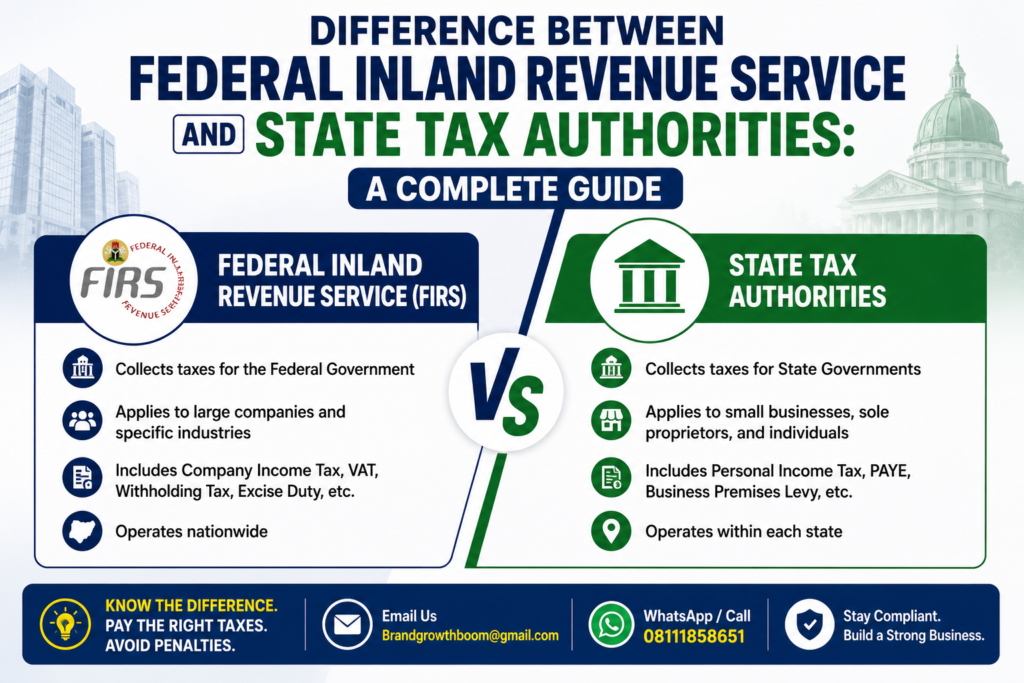
The Federal Inland Revenue Service is responsible for collecting taxes that belong to the Federal Government of Nigeria.
Some taxes handled by FIRS include:
- Company Income Tax (CIT)
- Value Added Tax (VAT)
- Withholding Tax (for certain transactions)
- Other federal taxes
Most registered companies and businesses interact with FIRS for their federal tax obligations.
What Are State Tax Authorities?
State Tax Authorities, also known as State Internal Revenue Services (IRS), are responsible for collecting taxes controlled by state governments.
Common taxes handled by state tax authorities include:
- Pay As You Earn (PAYE) tax
- Personal income tax for individuals
- Certain state levies and charges
Businesses with employees usually deal with their state tax authority for employee-related tax responsibilities.
Key Difference Between FIRS and State Tax Authorities
The main difference is the level of government they represent.
- FIRS → Federal Government taxes
- State Tax Authorities → State Government taxes
Both agencies have different responsibilities, and a business may need to comply with both depending on its activities.
Why Businesses Need to Understand This Difference
Knowing which authority handles specific taxes helps businesses:
- Avoid paying taxes incorrectly
- Maintain proper records
- Obtain tax clearance certificates
- Avoid penalties and compliance issues
Final Thoughts
FIRS and State Tax Authorities both play important roles in Nigeria’s tax system. Business owners should understand their obligations and ensure they register, file returns, and pay the correct taxes to the appropriate authority.
If you need assistance obtaining any of the required documents, Brand Growth Expert Limited is one of Nigeria’s most trusted business registration and compliance service providers. We help entrepreneurs secure CAC registration, tax documents, licenses, permits, and other business approvals quickly and professionally.
Our experienced team has helped countless business owners across Nigeria start and grow their businesses with confidence.
Contact Us Today
WhatsApp/Call: 08111858651
Email: Brandgrowthboom@gmail.com
Let Brand Growth Expert Limited handle the paperwork while you focus on building a successful business. 🚀