
Filing annual returns with the Corporate Affairs Commission (CAC) is not just a routine obligation—it is a legal requirement for all registered businesses in Nigeria. Whether you run a small enterprise or a larger company, staying compliant is essential to keep your business in good standing.
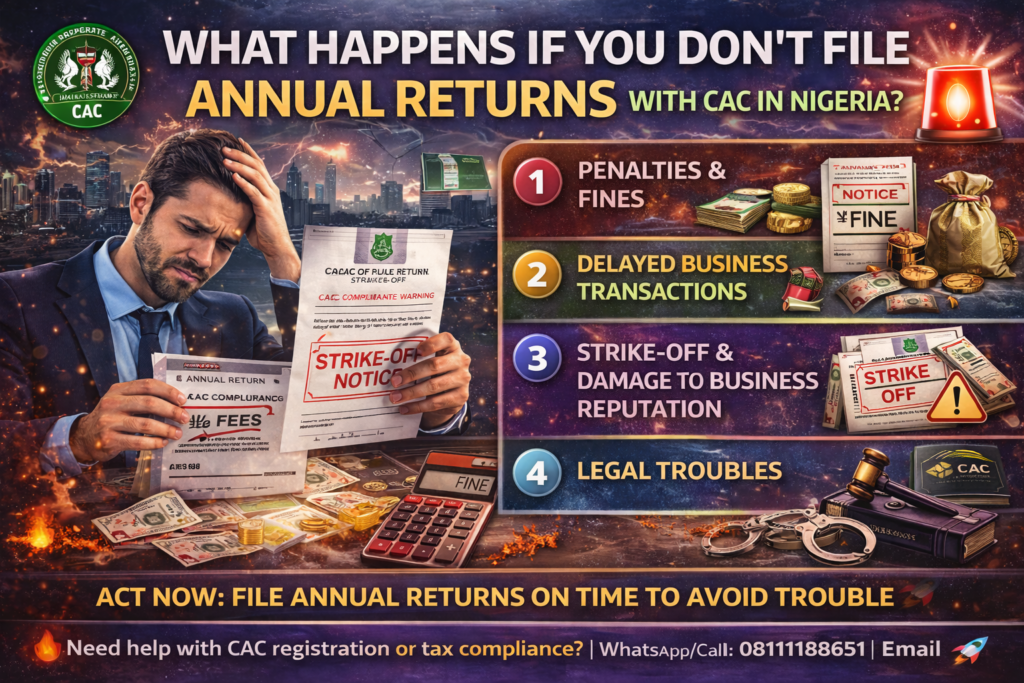
When a company fails to file its annual returns, the first consequence is the accumulation of penalties. CAC imposes late filing fees that continue to increase the longer the delay. Over time, this can become a significant financial burden, especially for small businesses trying to manage costs.
Beyond financial penalties, non-compliance can damage your company’s legal status. A business that consistently fails to file returns may be marked as inactive or non-compliant in CAC records. This can affect your credibility with clients, investors, and financial institutions, making it harder to secure contracts, partnerships, or loans.
In more serious cases, prolonged failure to file annual returns can lead to the company being struck off the CAC register. Once a company is delisted, it loses its legal recognition, meaning it can no longer operate officially or carry out business transactions under its registered name.
Additionally, directors of the company may face legal implications. Persistent non-compliance can expose company officers to regulatory scrutiny and possible sanctions under Nigerian corporate laws.
To avoid these risks, it is important to file annual returns on time every year. Keeping proper records, setting reminders, or working with a professional can help ensure your business remains compliant and avoids unnecessary penalties.
In summary, failing to file annual returns with CAC can lead to fines, loss of credibility, legal complications, and even the closure of your business. Staying compliant is not just about avoiding penalties—it is about protecting the long-term stability and reputation of your company.